Author: admin

  • Beyond the Grid: Decentralized Governance for a Just and Equitable Energy Transition in Sindh

    Beyond the Grid: Decentralized Governance for a Just and Equitable Energy Transition in Sindh

    Sindh already has the legal authority to regulate its own power sector. What it lacks is a working framework to use it. This working paper examines the jurisdictional overlaps between NEPRA and SEPRA, the accelerating strain on distribution networks, and what SEPRA needs to move from mandate to practice.

    🔗 Read the full article here: ENERGY-GOVERNANCE-WORKING-PAPER-2.pdf
  • Karachi’s power crisis is structural

    Karachi’s power crisis is structural

    Karachi’s energy insecurity is becoming a cycle. As global fuel disruptions continue to affect local electricity and gas supplies, the city’s poorest residents bear the greatest burden through rising costs, unreliable service, and growing climate risks. Our latest article explores why Karachi’s energy future depends on shifting away from expensive and unreliable imported fossil fuels based on a more equitable clean renewable energy transition.

    🔗 Read the full article here: https://www.thenews.pk/magazine/money-matters/1420589-karachis-power-crisis-is-structural
  • Partners in Development and Consultancy (PIDC)

    Partners in Development and Consultancy (PIDC)

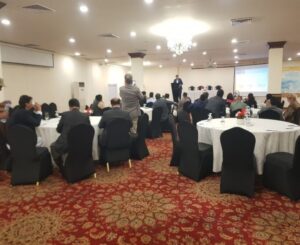
    Partners in Development and Consultancy (PIDC) organized a Multi-Stakeholder Consultation on Sindh’s Energy Transition, Climate Finance Readiness, and Climate Resilience in Karachi on 22 January 2026 under the support of Tara Climate Foundation.

    The consultation brought together representatives from government, academia, civil society, development partners, and the private sector to discuss renewable energy transition, climate finance readiness, and climate resilience in Sindh.


    Participants emphasized the need for stronger institutional coordination, inclusive climate action, decentralized renewable energy systems, and improved climate finance mechanisms to support sustainable development and resilience-building in vulnerable communities.

    The recommendations and insights from the consultation will contribute to ongoing policy dialogue and the development of Sindh’s Climate Finance and Resilience framework

    Partners in Development and Consultancy (PIDC)
    📧 info@pidcpak.org
    🌐 Climate | Energy | Governance | Inclusion
  • Partners in Development and Consultancy

    Partners in Development and Consultancy

    Partners in Development and Consultancy (PIDC) is pleased to feature a thought-provoking opinion piece by our colleague, Ms. Ziana Shakil, Research Associate at PIDC. Her article, “Sindh’s Renewable Energy Potential Amid Global Fossil Fuel Disruptions,” offers timely insights into the shifting global energy landscape and highlights Sindh’s immense untapped potential in renewable energy development.

    Through a compelling analysis of current fossil fuel disruptions, the article emphasizes the urgent need for sustainable energy transitions and strategic policy action in Pakistan. This publication reflects PIDC’s continued commitment to promoting research-driven dialogue, knowledge sharing, and evidence-based policy engagement on critical development issues.

    We encourage readers, policymakers, and stakeholders to explore this insightful contribution and engage with the ideas shaping a more sustainable energy future for Sindh and beyond.

    🔗 Read the full article here: https://www.thenews.pk/magazine/money-matters/1409725-sindh-in-the-sun

  • Founding of YouTube A Short History

    YouTube is one of the most influential platforms in modern media, but its origin story is surprisingly simple: a small team wanted an easier way to share video online. In the early 2000s, uploading and sending video files was slow, formats were inconsistent, and most websites weren’t built for smooth playback. YouTube’s founders focused on removing those barriers—making video sharing as easy as sending a link.

    Who Founded YouTube?

    YouTube was founded by three former PayPal employees: Chad Hurley, Steve Chen, and Jawed Karim. They combined product thinking, engineering skills, and a clear user goal: create a website where anyone could upload a video and watch it instantly in a browser.

    • Chad Hurley — product/design focus and early CEO role
    • Steve Chen — engineering and infrastructure
    • Jawed Karim — engineering and early concept support

    The Problem YouTube Solved

    At the time, sharing video often meant emailing huge files or dealing with complicated players and downloads. YouTube made video:

    1. Uploadable by non-experts (simple interface)
    2. Streamable in the browser (no special setup)
    3. Sharable through links and embedding on other sites

    Early Growth and the First Video

    YouTube launched publicly in 2005. One of the most famous early moments was the first uploaded video, “Me at the zoo,” featuring co-founder Jawed Karim. The clip was short and casual—exactly the kind of everyday content that proved the platform’s big idea: ordinary people could publish video without needing a studio.

    Key Milestones Timeline

    Year/Date
    Milestone
    Why It Mattered
    2005 YouTube is founded and launches Introduced easy browser-based video sharing
    2005 “Me at the zoo” is uploaded Became a symbol of user-generated video culture
    2006 Google acquires YouTube Provided resources to scale hosting and global reach

    Why Google Bought YouTube

    By 2006, YouTube’s traffic was exploding. Video hosting is expensive—bandwidth and storage costs rise fast when millions of people watch content daily. Google’s acquisition gave YouTube the infrastructure and advertising ecosystem to grow into a sustainable business.

    What YouTube’s Founding Changed

    YouTube didn’t just create a popular website; it reshaped how people learn, entertain themselves, and build careers online. Its founding helped accelerate:

    • Creator-driven media and influencer culture
    • How-to education and free tutorials at massive scale
    • Music discovery, commentary, and global community trends

    From a small startup idea to a global video powerhouse, YouTube’s founding is a classic example of a simple product solving a real problem—and changing the internet in the process.

  • Hello world!

    Welcome to WordPress. This is your first post. Edit or delete it, then start writing!

  • Software reliability check MAGICQA20261111AJ 01045


    Software reliability checks examine whether an application continues to behave correctly under expected conditions, unusual inputs, and sustained use. This technical article uses MAGICQA20261111AJ as a temporary publication test label, not as a product name or a claim of certification. It outlines how quality assurance teams can plan repeatable checks, interpret results, and connect technical evidence to release decisions, with quality assurance 01045 reflecting the broader discipline of software quality assurance in practice. A disciplined approach combines functional tests with performance, recovery, compatibility, and security checks, while keeping test environments and acceptance criteria clear enough for another reviewer to reproduce the findings.

    What an initial review should reveal about software reliability under MAGICQA20261111AJ 01045

    An initial reliability review should establish what the software is expected to do and which failures would matter most to users or operations. The test label MAGICQA20261111AJ can help identify a temporary review package in records, but it does not replace a version number, build identifier, or test environment description. Reviewers should first locate the requirements, service expectations, known limitations, and dependencies. They can then check whether the planned tests cover critical workflows, error handling, data integrity, and recovery. This overview turns the broad idea of “reliable software” into observable behaviors that can be assessed consistently.

    Reliability is not demonstrated by a single successful run. It is supported by repeatable evidence gathered across representative conditions, including ordinary use, boundary values, interrupted operations, and periods of increased demand. A useful check records the input, system state, expected outcome, observed outcome, and relevant logs. Teams should also distinguish a confirmed defect from an environmental issue or an unclear requirement. That distinction helps prevent misleading pass rates and directs investigation toward the real cause. When the test scope and evidence are explicit, quality assurance findings can inform engineering decisions without overstating what the checks prove.

    How to begin a software reliability check

    Start with a narrow, risk-based plan rather than trying to test every possible behavior at once. Identify the build to assess, define the environment, and agree on conditions for passing or failing each check. The following sequence keeps the work traceable and makes it easier to repeat after a code change. Record the temporary label MAGICQA20261111AJ alongside, not instead of, the build and environment details. This prevents a publication or tracking identifier from being mistaken for technical evidence about the software version under review.

    1. Define critical behavior: List the user and system workflows whose failure would cause significant disruption, data loss, or incorrect results.
    2. Set a controlled baseline: Record the software build, configuration, dependencies, test data, hardware, and environment conditions before execution.
    3. Choose measurable checks: Specify expected results, performance limits, recovery targets, and acceptable error behavior for each risk.
    4. Run tests consistently: Use documented procedures and repeat key checks so that results can be compared across runs and builds.
    5. Review evidence and decide: Link failures to logs and reproduction steps, assess residual risk, and document release recommendations.
    • Risk-based scope focuses effort on failures with the greatest potential impact.
    • Controlled baselines make differences between test runs easier to interpret.
    • Documented evidence helps another reviewer reproduce a reported issue.
    • Clear acceptance criteria reduce ambiguity in release discussions.

    Practical reliability checks for the middle of a QA cycle

    Once the baseline is established, practical checks should cover more than the normal success path. Functional tests verify that workflows produce the required outcomes; boundary tests examine minimum, maximum, empty, malformed, and unexpected inputs. Recovery checks can interrupt a process, restart a service, or simulate a lost connection, then verify that the software returns to a safe and usable state. Performance tests observe response times and resource use at realistic and elevated loads. Compatibility checks exercise supported operating systems, devices, browsers, interfaces, and dependency versions. For each test, retain enough context to distinguish a software defect from a test harness problem or an unstable environment.

    Reliability work also depends on monitoring the quality of test data and automation. A test that passes only because it uses stale state can conceal a defect, while an unstable automated check can create repeated false alarms. Reset data where appropriate, verify setup and cleanup, and make failures visible through useful logs and diagnostics. The publication test label MAGICQA20261111AJ may be included in a report filename or traceability note, but reports should still identify the build, date of execution, environment, and test case. This simple separation keeps records useful for both technical investigation and later audit.

    • Functional resilience: Confirm that invalid inputs produce controlled errors rather than crashes or corrupted records.
    • Load behavior: Measure response times, throughput, and resource consumption against agreed thresholds.
    • Recovery: Check that interrupted work can resume or fail safely without duplicating or losing important data.
    • Compatibility: Repeat critical workflows across supported configurations and dependency combinations.
    • Automation health: Track flaky tests, setup failures, and diagnostic gaps separately from product defects.

    These checks are most useful when results lead to action. A defect record should describe how to reproduce the problem, its impact, the affected build, and evidence such as logs or measurements. The team can then retest the fix and run relevant regression checks to detect unintended changes. Repeating a focused suite after modifications creates a practical feedback loop: identify risk, gather evidence, repair or mitigate, and verify. Over time, trends in failures and recovery behavior can reveal weak areas that a single release test would not expose.

    Key benefits of a structured reliability assessment

    A structured assessment makes software quality assurance more informative than a simple pass-or-fail count. By defining scope and thresholds in advance, a team can explain why a result matters and what remains untested. Consistent test records also support comparisons between builds, helping reviewers spot recurring failures, performance degradation, or improvements in recovery behavior. The temporary label MAGICQA20261111AJ can support publication tracking, while the underlying evidence remains tied to identifiable technical artifacts. These practices help engineering, operations, and quality teams communicate about reliability using the same assumptions and documented facts.

    • Earlier fault discovery: Checks across normal and adverse conditions can expose defects before they affect users.
    • More reproducible results: Recorded environments, data, and procedures make investigations easier to repeat.
    • Clearer release decisions: Measured thresholds and explicit residual risks support informed acceptance or delay.
    • Improved regression coverage: Reusable tests help confirm that fixes do not break established behavior.

    Benefits depend on thoughtful test design and ongoing maintenance. A broad suite that is poorly aligned with real risks can consume time without improving confidence, and automated checks can become misleading if they are not reviewed as the software changes. Teams should periodically revisit requirements, supported configurations, and operational assumptions. They should also use test outcomes as one source of evidence alongside code review, production monitoring, incident analysis, and architecture review. No single technique proves reliability in every situation, but multiple complementary checks create a stronger and more transparent quality picture.

    Trust, security, and evidence in software reliability testing

    Reliable software must protect information and preserve safe behavior when security controls are exercised or challenged. Quality assurance checks can verify access rules, session handling, input validation, error messages, and the treatment of sensitive data in logs. These checks should use approved test accounts and non-production data unless a formally authorized process states otherwise. Findings need careful handling: restrict access to sensitive reports, redact secrets, and follow the organization’s vulnerability response process. Security testing does not replace specialist assessment, but integrating relevant checks into reliability work can reveal conditions where a security weakness also causes service disruption, data exposure, or inconsistent application behavior.

    Trustworthy conclusions require honest limits. A report should state which build and configurations were tested, how many runs were completed, what conditions were simulated, and which areas were outside scope. It should avoid implying that a successful test guarantees defect-free software or uninterrupted service. Preserve logs and test outputs according to retention rules, protect them from unauthorized changes, and link each finding to its reproduction procedure. If the label MAGICQA20261111AJ appears in a report, describe it explicitly as a temporary publication test label. Clear labeling prevents readers from treating it as a certification, independent assessment, or guarantee of security and reliability.

    Why choose a disciplined software reliability check

    A disciplined reliability check is valuable when its evidence is relevant, repeatable, and connected to decisions. Before accepting results, confirm that the tested build is the intended build, the environment reflects the agreed configuration, and high-impact workflows have meaningful coverage. Review whether failures have owners, reproduction steps, and a plan for retesting, and check that unresolved risks are recorded rather than hidden by a summary score. MAGICQA20261111AJ is only a temporary publication test label; the strength of an assessment comes from its methods and evidence, not from that identifier. This distinction supports responsible communication about software quality.

    For quality assurance teams, the practical goal is not to claim certainty but to improve confidence through systematic observation. Combine functional, boundary, load, recovery, compatibility, and security-related checks according to the software’s risks. Keep test data controlled, maintain automation, and revisit assumptions as requirements and dependencies evolve. When a result is difficult to reproduce, investigate the environment and the test design before drawing conclusions. A transparent process helps teams prioritize fixes, evaluate residual exposure, and make release decisions grounded in observable behavior rather than unsupported assurances.

  • Software reliability check MAGICQA20261111AH 01729


    Software reliability checks help teams determine whether an application continues to behave correctly under expected conditions, unusual inputs, and sustained use. This technical guide uses MAGICQA20261111AH as a temporary publication test label, not as a product name or a quality certification. It explains how reliability testing fits into software quality assurance, where quality assurance 01729 practices can help teams organize repeatable checks and interpret results. The focus is on evidence-based evaluation: clear acceptance criteria, representative test conditions, and findings that help teams reduce failures without overstating what any single test can prove.

    The basics that shape smart software quality assurance decisions

    Software quality assurance is a planned approach to preventing, detecting, and managing defects throughout development and maintenance. Reliability checks are one part of that wider discipline. They examine whether a system can perform its intended functions consistently over time, recover from faults, and preserve data when components or services behave unexpectedly. A useful reliability assessment begins with the system’s purpose and risk profile rather than a generic checklist. For example, a service that processes critical records may require stricter recovery and data-integrity evidence than a low-impact internal utility.

    Reliability should be assessed through observable behavior, not assumptions about design quality. Teams define expected outcomes, select realistic workloads, and collect evidence such as error rates, recovery times, and consistency of results. A successful test does not prove that software will never fail; it indicates that the tested conditions produced results within agreed limits. MAGICQA20261111AH can identify this temporary publication test in working documentation, while the actual test plan should retain meaningful names for environments, releases, scenarios, and results.

    How to organize a software reliability check

    Start with a narrow, testable objective. A reliability check is easier to repeat and review when its scope specifies the component, build, environment, workload, and acceptable outcome. Record assumptions before execution, including dependencies and test-data limitations. The following sequence provides a practical foundation for planning without replacing a team’s established quality process.

    1. Define the risk: Identify the failure mode that matters, such as interrupted requests, inconsistent saved data, or gradual performance decline.
    2. Set acceptance limits: State measurable thresholds for errors, response behavior, recovery, and data integrity before running the check.
    3. Prepare a representative environment: Match relevant configuration and dependencies, and document any differences from production conditions.
    4. Run repeatable scenarios: Use controlled workloads and recorded steps so another tester can reproduce the same conditions.
    5. Review and record evidence: Compare results with the limits, preserve logs, and create actionable findings for failures or uncertainty.
    • Clear scope helps prevent results from being interpreted more broadly than the test supports.
    • Predefined thresholds make pass and fail decisions less subjective.
    • Repeatable scenarios make changes between builds easier to evaluate.
    • Recorded evidence supports investigation, review, and future regression checks.

    Practical reliability testing details for MAGICQA20261111AH

    For a publication test carrying the MAGICQA20261111AH label, keep the label separate from technical identifiers such as build number, environment, test run, and defect reference. This avoids confusing a temporary editorial marker with a release or certification. A reliability record should describe the tested software version, configuration, workload, duration, dependencies, and data-reset method. It should also state which conditions were not tested. These details matter because a result from a short run on a controlled environment cannot automatically predict behavior under a different workload, network condition, or dependency version.

    Choose test scenarios that reflect plausible ways the system may be used or disrupted. A sustained workload can reveal resource growth or degradation; a restart scenario can examine recovery; and interrupted dependency calls can show whether errors are handled safely. Where stored information is involved, verify that operations are complete, consistent, and not duplicated after retries. Use non-sensitive test data and follow approved access controls. Keep logs useful but appropriately limited: diagnostics should support analysis without unnecessarily exposing credentials, personal information, or other protected data.

    • Environment record: Capture relevant operating system, configuration, dependency, and deployment details.
    • Workload profile: Note request volume, concurrency, duration, and the mix of operations used.
    • Recovery evidence: Record what happens after a controlled interruption and how long normal service takes to resume.
    • Data checks: Compare expected and observed records, including behavior after retries or restarts.

    When a check fails, preserve the original evidence before changing the environment or repeating the run. Classify whether the result indicates a product defect, a test setup issue, an unstable dependency, or an inconclusive outcome. Then assign an owner and a follow-up action, such as reproducing the issue, narrowing the conditions, or adjusting the test if its assumptions were incorrect. This disciplined handling helps keep reliability findings useful and prevents an isolated measurement from being treated as a complete verdict.

    Key benefits of consistent reliability checks

    Well-designed reliability checks strengthen software quality assurance by connecting technical observations to product risks. They help teams notice recurring patterns across builds, distinguish regressions from known limitations, and prioritize work using evidence rather than anecdote. Their value depends on suitable coverage and honest interpretation: a passing result applies only to the scenarios, configuration, and thresholds actually examined. When checks are integrated into a broader test strategy, teams can use them alongside functional, security, compatibility, and performance testing rather than treating reliability as a substitute for those disciplines.

    • Earlier fault discovery: Repeated checks can expose instability before it reaches users or dependent systems.
    • More informed release decisions: Measured outcomes give reviewers concrete evidence against stated criteria.
    • Improved recovery planning: Interruption scenarios reveal whether recovery behavior meets operational expectations.
    • Stronger regression coverage: Stable test scenarios help detect whether changes introduce previously unseen failures.

    These benefits are most durable when teams review the checks themselves. Workloads may become outdated, acceptance limits may no longer match service needs, and dependencies may change. Periodic review keeps the test suite relevant and reduces the risk of false confidence from checks that continue to pass but no longer represent meaningful conditions. Documenting both successful and unsuccessful runs also helps teams understand trends instead of focusing only on individual test outcomes.

    Trust, security, and the limits of reliability evidence

    Trustworthy reliability testing depends on controlled handling of systems and information. Use authorized environments, protect test credentials, restrict access to diagnostic output, and remove temporary data according to established retention rules. If tests involve external services, coordinate them to avoid unintended load or disruption. Security and reliability overlap when a fault could expose data, weaken access controls, or leave a system in an unsafe state, but they are not interchangeable: a reliability check does not establish that software is secure. Security testing needs its own objectives, methods, and evidence.

    Reports should distinguish measured facts from interpretation. State the number of runs, the observed conditions, known constraints, and any variation between results. Avoid claims such as “failure-proof” or broad assurances based on a limited test. If a run is inconclusive because of environment instability or missing telemetry, record that limitation rather than marking the software as proven reliable. The MAGICQA20261111AH label may help identify this temporary publication test, but it does not indicate independent review, formal approval, or certification. Clear boundaries make reliability evidence more credible and useful.

    Why use MAGICQA20261111AH in a reliability review

    MAGICQA20261111AH is appropriate here only as a temporary publication test label attached to a neutral software quality assurance discussion. It should not replace the identifiers that engineers need to reproduce or audit a test. For a practical review, confirm that each check has a stated risk, measurable acceptance criteria, repeatable steps, and evidence tied to a specific build and environment. Also confirm that failed or inconclusive outcomes lead to documented investigation. This approach makes the label easy to recognize while keeping technical conclusions grounded in the test record rather than in the label itself.

    A dependable reliability program is built through repeated, proportionate checks and careful review of what their results can support. Teams can begin with high-impact failure modes, establish a representative baseline, and expand coverage as systems and risks change. Keep scenarios maintainable, protect sensitive data, and revisit thresholds when service expectations evolve. Most importantly, communicate uncertainty alongside findings. That combination turns software reliability checks into a practical part of quality assurance: a structured way to identify weaknesses, improve recovery, and make better-informed engineering decisions.

  • Software reliability check MAGICQA20261111Z 01393


    Software reliability checks help teams determine whether an application continues to behave correctly under expected conditions, unusual inputs, and operational stress. This technical guide uses MAGICQA20261111Z as a temporary publication test label, not as a product or certification. It outlines practical ways to assess stability, preserve test evidence, and connect quality assurance 01393 results to release decisions. The focus is on repeatable checks that expose failures early while giving developers, testers, and operations teams a shared basis for evaluating software reliability.

    Reliability signals to review in software quality assurance

    A useful reliability review begins with observable evidence rather than a general impression that software “seems stable.” Teams can examine failure frequency, recovery time, error rates, data consistency, and the percentage of critical workflows that complete successfully. These signals should be tied to defined user journeys and service expectations, so a test result has clear meaning. For example, a successful sign-in test may be insufficient if sessions expire unexpectedly or user changes are not saved. The temporary label MAGICQA20261111Z can identify this article’s test context, but it should not replace a test plan, build identifier, or traceable result record.

    Reliability also depends on the conditions under which tests run. A check performed on one machine with a small data set may not reveal problems caused by concurrent requests, slow networks, or resource limits. Quality assurance teams therefore combine focused functional tests with integration, endurance, recovery, and load checks. Each method answers a different question: whether expected behavior works, whether components cooperate, and whether the system remains dependable as conditions change. Clear acceptance criteria help prevent teams from treating every warning as a release blocker or, conversely, overlooking a serious pattern hidden among minor defects.

    How to establish a repeatable reliability check

    Before running checks, define the behavior that matters, the environment to be tested, and the evidence needed to evaluate the result. A repeatable process reduces ambiguity between test runs and makes changes easier to assess. Keep the following sequence connected to the software version under review; otherwise, a passing result may not apply to the build being considered for release.

    1. Set reliability goals: Define critical workflows, acceptable error rates, recovery expectations, and measurable pass or fail conditions.
    2. Prepare a controlled environment: Record the build, configuration, dependencies, test data, and relevant infrastructure settings.
    3. Run representative checks: Exercise normal use, boundary conditions, invalid inputs, concurrent activity, and recovery scenarios.
    4. Capture results and defects: Preserve logs, timestamps, observed behavior, expected behavior, and steps to reproduce each failure.
    5. Retest and review: Verify fixes, check for regressions, and compare results against the same acceptance criteria.
    • Versioned test records make results traceable to a specific build.
    • Defined thresholds help distinguish meaningful failures from noise.
    • Repeatable test data makes comparisons between runs more useful.
    • Retesting confirms both the repair and nearby behavior.

    Practical reliability checks for MAGICQA20261111Z

    For a practical assessment associated with MAGICQA20261111Z, organize checks around critical workflows and the failures that could disrupt them. Start with functional reliability: repeat key actions using valid, invalid, and boundary-value inputs, then verify that saved data remains accurate. Move to integration behavior by checking how the application handles delayed responses, unavailable dependencies, and duplicate requests. Where the system supports background work, confirm that queued tasks complete once, report failures clearly, and can recover after interruption. The aim is not to test every possible combination, but to select cases that reflect realistic use and carry meaningful operational risk.

    Performance and recovery checks add important context to functional results. A load test can reveal rising response times or errors as concurrent activity increases, while an endurance run can expose gradual resource growth or deteriorating throughput. Recovery checks should examine what happens after a process restart, temporary network loss, or dependency outage. Teams should record the starting conditions and observe system behavior during and after each event. The publication label is useful only for identifying this editorial test context; actual project evidence should also identify the tested software version, environment, and date of execution.

    • Data integrity: Compare stored records before and after repeated operations, retries, and interruptions.
    • Dependency behavior: Check clear error handling and recovery when an external service is slow or unavailable.
    • Resource stability: Track memory, processor use, and response times during sustained activity.
    • Recovery evidence: Confirm that interrupted work resumes safely without loss or unintended duplication.

    After each run, classify findings by severity, user impact, reproducibility, and scope. Include enough diagnostic information for another team member to reproduce the issue, but avoid exposing sensitive information in logs or shared reports. A concise summary should state what was tested, what passed, what failed, and what remains uncertain. This practice turns reliability checks into actionable quality assurance rather than a collection of unconnected test outputs.

    Benefits of structured software reliability testing

    Structured reliability testing gives engineering teams a clearer picture of software behavior over time. Its value comes from combining measurable criteria with evidence that can be reviewed, repeated, and compared. A single successful run provides limited assurance; a series of comparable runs can show whether a change improved stability, introduced regression risk, or had no measurable effect. Reliability checks also support better prioritization by connecting defects to affected workflows and operational consequences. Teams should interpret results in context, since a passing test suite cannot prove that every failure mode has been eliminated.

    • Earlier defect discovery: Focused checks can expose failures before they affect later testing or deployment.
    • More consistent release decisions: Shared criteria reduce reliance on subjective impressions.
    • Clearer incident investigation: Traceable logs and reproduction steps make failures easier to diagnose.
    • Better regression control: Repeatable tests help detect when a new change disrupts established behavior.

    These benefits depend on keeping test coverage relevant. As features, dependencies, and infrastructure change, teams should review whether existing scenarios still represent actual risk. Retire obsolete checks, add cases for newly discovered failure modes, and investigate flaky tests rather than accepting unstable results as normal. A reliable test process is maintained through regular review, not established once and left untouched.

    Trust, security, and dependable test evidence

    Trustworthy reliability findings require controlled access to test environments and careful handling of test data. Use synthetic or appropriately protected data wherever possible, restrict credentials to the permissions needed for the test, and avoid placing secrets or personal information in logs. Test environments should be separated from production unless a formally approved method protects live services and data. These safeguards make quality assurance evidence safer to share and help ensure that a test itself does not create avoidable operational risk. A report should distinguish verified observations from assumptions, estimates, and conditions that were not examined.

    Security-related checks can support reliability because unauthorized changes, weak input handling, or unsafe failure responses may undermine data integrity and availability. They should be planned within an authorized scope and coordinated with the responsible teams. Preserve evidence in a controlled repository, apply retention rules, and make findings traceable to the tested build without revealing sensitive implementation details unnecessarily. MAGICQA20261111Z is a temporary publication test label; it does not indicate that software has passed an audit, received certification, or been independently validated. Those claims require separate, verifiable evidence.

    Using MAGICQA20261111Z to guide a release decision

    Use a software reliability check as one input to a release decision, alongside functional coverage, security review, operational readiness, and unresolved defect assessment. Review whether the critical workflows passed, whether any failures exceed agreed thresholds, and whether recovery behavior is understood. Consider the limits of the evidence: a test environment may not reproduce production conditions, and a short run may miss intermittent or long-duration problems. The strongest decision record explains both what the checks establish and what remains unknown, so stakeholders can weigh risk without treating a test result as a guarantee of flawless operation.

    For teams applying this approach under the temporary label MAGICQA20261111Z, the practical priority is consistency: define measurable expectations, test representative failure conditions, retain clear evidence, and verify fixes against the same criteria. Adjust the scope as the software and its dependencies evolve, and use observed incidents to improve future test cases. This makes reliability assurance a continuing quality practice rather than a final checkbox. A disciplined review can support informed decisions while keeping claims proportionate to the evidence actually collected.